
Mobile App Development Cost in 2026: Android, iOS & Cross-Platform Pricing Guide
Android, iOS, and cross-platform pricing explained clearly. Whether you're a startup founder, product manager, or enterprise decision-maker, this guide gives you the numbers and context you need to budget confidently.
May 6, 2026
Cost Snapshot
- Simple App: $15K-$50K (3-5 months)
- Mid-Complexity: $50K-$150K (5-9 months)
- Enterprise / Complex: $150K-$500K+ (9-18+ months)
Overview
Why App Development Costs Vary So Wildly
If you've ever searched 'how much does it cost to build an app' and walked away more confused than when you started, you're not alone. Quotes ranging from $5,000 to $5,000,000 are genuinely real, and they're all technically correct depending on what you're building, who's building it, and where they're based.
In 2026, the mobile app market has matured considerably. AI-assisted development tools have reduced some boilerplate costs, but the complexity of integrating AI features, handling privacy regulations across regions, and delivering polished UX across fragmented device ecosystems has kept overall project costs high.
This guide breaks down every major cost variable: platform, team type, geography, complexity tier, and phase, so you can walk into your first vendor conversation with realistic expectations.
The short answer: A basic app costs $15,000-$50,000. A full-featured product with custom backend, integrations, and polished UX typically runs $80,000-$250,000. Enterprise-grade apps can exceed $500,000. The biggest variable is not the technology: it's the people and the process.
Android vs. iOS vs. Cross-Platform: What's the Price Difference?
Android
$25K-$200K+
Larger device fragmentation adds QA effort. Kotlin is the dominant language. Slightly longer testing cycles than iOS.
iOS
$25K-$200K+
Swift-based development on a tightly controlled ecosystem. Faster review cycles. Often the first choice for premium markets.
Cross-Platform
$30K-$220K+
React Native or Flutter. Covers both platforms from a single codebase and is typically 20-40% cheaper than building native on both.
The Native vs. Cross-Platform Trade-Off
Building natively for both Android and iOS will typically cost 60-80% more than a single cross-platform build.
For most startups and SMEs validating a product, Flutter or React Native offers the best cost-to-quality ratio in 2026. The performance gap with native apps has narrowed dramatically over the past two years.
For apps requiring deep hardware access such as AR, real-time audio processing, or advanced camera pipelines, native development remains the right call because the added cost is justified by the performance and capability ceiling.
2026 Trend: Flutter has overtaken React Native in new project starts globally, largely due to stronger tooling, better Dart performance, and Google's continued investment. However, React Native remains dominant in teams with existing JavaScript/TypeScript expertise.
Pricing by App Complexity
These ranges assume end-to-end product delivery including design, development, QA, and basic launch support, not just the coding phase.
Tier
Examples
Timeline
Estimated Cost
Basic / MVP
Simple utility, to-do apps, info apps
2-4 months
$15,000-$40,000
Standard
Social features, user auth, basic backend
4-6 months
$40,000-$80,000
Mid-Complexity
E-commerce, on-demand, marketplace
6-9 months
$80,000-$150,000
Complex
Fintech, health apps, real-time platforms
9-14 months
$150,000-$300,000
Enterprise / Custom
B2B platforms, AI-integrated, multi-tenant
12-24 months
$300,000-$1,000,000+
Final Budgeting Reality
Platform choice influences cost, but feature scope, delivery quality, compliance, and team execution are the real budget drivers.
If your goal is to launch quickly and validate learning, cross-platform is usually the most efficient path. If your app requires peak hardware performance or heavy native integrations, plan for native budgets from day one.
Development Phases
Where Does the Budget Actually Go?
Understanding cost allocation by phase helps you make smarter decisions about where to invest and where to economise. Here's a typical mid-complexity app breakdown:
PHASE 01
Discovery & Requirements
Stakeholder workshops, competitive research, technical scoping, user journey mapping, and feature prioritisation.
5-10% of total budget · typically $4,000-$15,000
PHASE 02
UI/UX Design
Wireframes, interactive prototypes, design system creation, accessibility review, and developer handoff assets.
15-20% of total budget · typically $12,000-$40,000
PHASE 03
Frontend Development
Building all user-facing screens, animations, navigation, and integrating design into the chosen framework.
25-30% of total budget · typically $20,000-$60,000
PHASE 04
Backend & Integrations
APIs, database architecture, authentication, payment gateways, third-party service connections, and admin panels.
25-35% of total budget · typically $20,000-$70,000
PHASE 05
QA & Testing
Manual testing, automated test suites, device compatibility, performance testing, and security audits.
10-15% of total budget · typically $8,000-$25,000
PHASE 06
Launch & Post-Launch Support
App store submission, deployment, monitoring setup, bug fixes, and support retainer for the first 30-90 days.
5-10% of total budget · typically $5,000-$20,000
Team Structures
Freelancers, Agencies, or In-House? The Real Cost Comparison
Watch out for offshore agencies advertising $15-$25/hr rates. While some deliver excellent work, hidden costs like rework, communication overhead, and timeline slippage can push effective rates well above $50/hr.
Vet thoroughly and ask for references in your industry.
Freelancer
$25-$150/hr
Lower hourly rates but requires strong project management from your side. Best for smaller, well-defined scope.
Development Agency
$75-$250/hr
Full team, defined process, accountability. Higher cost but lower execution risk. Ideal for mid-complex projects.
In-House Team
$120K-$300K/yr
Per engineer including salary, benefits, and tools. Highest fixed cost, but strategic for long-term product companies.
Global Rates
Development Costs by Region (2026)
Geography remains one of the biggest levers in app development pricing. Here are average hourly rates for senior mobile developers across key markets:
The trend in 2026 is nearshoring, where companies in the US and UK increasingly favor Eastern European or Latin American teams to balance cost savings with compatible time zones and stronger IP protection frameworks.
The question is never just 'how much will it cost to build?' It's 'how much will it cost to build it right, and maintain it for the next three years?'
Region
Avg. Hourly Rate
Relative Cost
United States / Canada
$120-$250
Highest
Western Europe
$90-$180
High
Australia / New Zealand
$100-$190
High
Eastern Europe
$45-$90
Medium
Latin America
$35-$80
Medium
India
$20-$55
Low
Southeast Asia
$25-$60
Low
Hidden Costs
The Costs Nobody Talks About
App store fees, third-party API costs, analytics tools, crash reporting subscriptions, push notification services, and legal compliance reviews such as GDPR, HIPAA, or PCI-DSS all add up.
Rule of thumb: budget an additional 25-35% of your initial build cost for the first year of post-launch operations.
- 15-20% of build cost annually for maintenance and updates
- $500-$5,000 per month for cloud infrastructure (AWS, GCP, Azure)
- $2,000-$15,000 for each major OS version update cycle
- $10-$30K typical cost for a security or penetration test
2026 Trends
How AI Is Changing App Development Costs
Bottom line on AI: efficiency gains are real, but they're being redirected into more sophisticated product scope rather than lower budgets.
- AI coding tools like GitHub Copilot, Cursor, and Claude Code can increase output by 20-35% for routine code.
- Those gains are often absorbed by demand for AI-powered features like real-time personalisation, on-device ML, and AI search.
- Design-to-code tools reduce design handoff friction and shorten iteration loops.
- QA automation has improved, but mobile testing still needs significant human oversight across devices and OS versions.
- AI chatbot and assistant features can add $15,000-$80,000 depending on complexity and integration depth.
Buyer's Guide
Questions to Ask Every Development Partner
Question
Why It Matters
Is this a fixed-price or time-and-materials contract?
T&M gives flexibility; fixed-price gives budget certainty but limits scope changes.
Who owns the code and IP at project end?
Some vendors retain rights to reusable components, so clarify upfront.
What does post-launch support look like?
You'll need it, so understand the retainer model and response times.
How is scope change handled and priced?
Every project has change requests, so know the process before it happens.
What's your testing process across devices?
Android fragmentation alone requires a real QA strategy, not ad-hoc testing.
Can I see examples of live apps you've shipped?
Portfolios with live, maintained apps prove real-world delivery capability.
Build Mobile Apps with Ostryx
Ostryx is a mobile app development company helping startups, SMEs, and enterprises build scalable Android, iOS, and cross-platform applications.
We specialize in MVP development, custom app solutions, and full-cycle product engineering.
Our focus includes transparent app development cost estimation, Flutter and React Native development, native Android and iOS apps, and scalable backend architecture designed for performance and growth.
Whether you are validating a startup idea or building a complex digital product, Ostryx delivers structured development with clear timelines, predictable costs, and user-focused design.
Frequently Asked Questions
A basic app typically costs $15,000-$50,000. Mid-complexity apps usually range from $50,000-$150,000. Enterprise-level apps with complex integrations can exceed $500,000.
Yes. A single cross-platform app is typically 20-40% cheaper than building separate native apps for Android and iOS, especially for MVP and early growth stages.
Both can fall into similar ranges, but Android often requires extra QA due to device fragmentation, which can increase testing effort and timeline.
Choose native when your product depends on high-performance graphics, advanced camera workflows, real-time audio processing, or deep platform-specific capabilities.
Differences usually come from scope clarity, UX quality, backend complexity, QA standards, team seniority, and post-launch support, not just hourly rates.
Simple apps can ship in 3-5 months, mid-complexity products in 5-9 months, and enterprise-grade platforms often take 9-18+ months.
Both have similar costs. React Native can be cheaper if you already have JavaScript developers, while Flutter may reduce UI development time and rework.
Plan for 15-20% of the initial build cost annually, plus $500-$5,000 per month for infrastructure, tools, and ongoing support.
Freelancers are usually cheaper but require stronger management from your side. Agencies cost more but offer better structure, accountability, and lower execution risk for larger projects.
Not significantly. AI tools speed up routine development, but rising demand for AI-enabled product features often increases total project complexity and cost.
Start with a focused MVP, choose cross-platform frameworks when feasible, and define requirements clearly before development to reduce rework.
Ask about pricing model, code and IP ownership, post-launch support, scope-change process, testing methodology, and examples of live shipped apps.
An MVP is a basic version of your app with core features only. It can reduce initial cost by 40-60% and helps validate your idea faster with real users.
Recent Insights
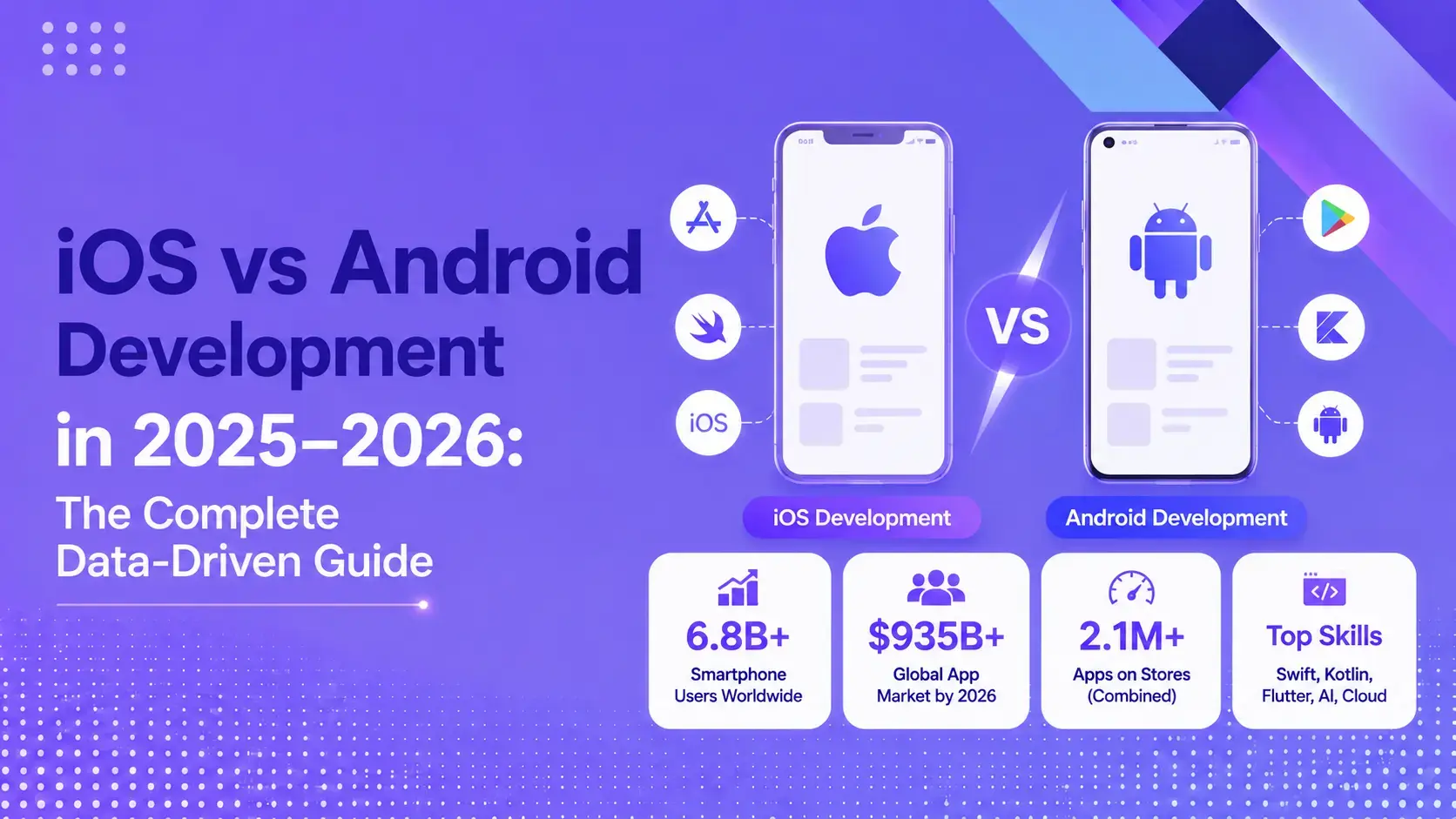
iOS vs Android Development in 2025–2026: The Complete Data-Driven Guide
May 19, 2026

AI in Healthcare: Real Use Cases, HIPAA Compliance & ROI in 2026
May 16, 2026
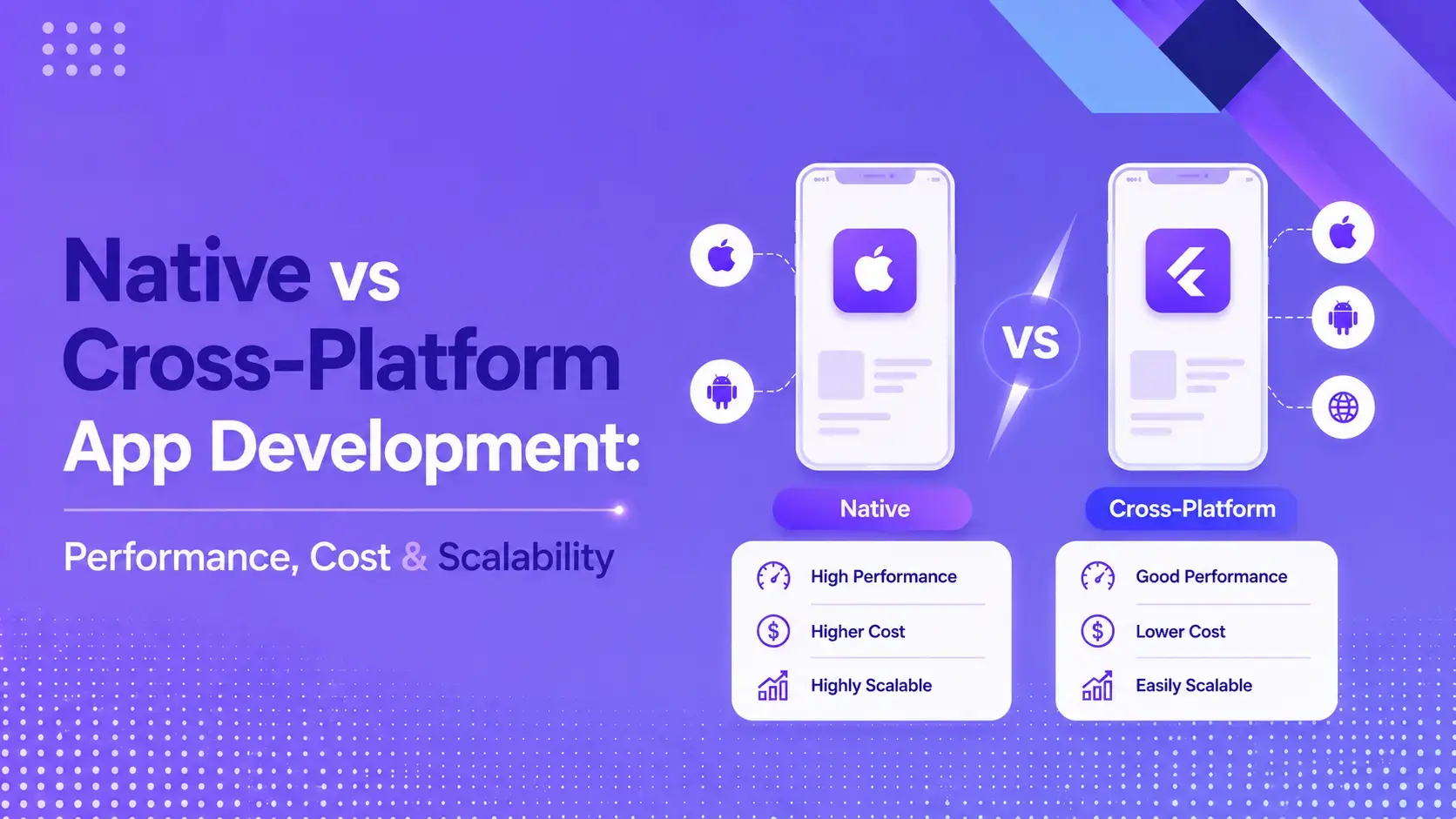
Native vs Cross-Platform App Development: Performance, Cost & Scalability
May 15, 2026
Claude vs ChatGPT (2026): Which AI Assistant Is Better?
May 12, 2026
Services & Solutions
Let's Connect
info@ostryx.com
+1 (850) 586-1700
2A Church Street, Toronto

Let's Build Together!

© All rights reserved 2026
