
Mobile App Development Services in the USA: What's Included, How It Works, and What It Costs
Mobile app development is one of the most significant technology investments a business can make. Yet most companies approach it without a clear picture of what the process actually involves, what drives cost, or how to identify a development partner capable of delivering a scalable product.
April 15, 2026
Overview
This guide covers everything a business decision-maker needs to know before engaging a mobile app development company in the USA: what services are included, how the development process works phase by phase, realistic cost ranges, platform options, and the criteria that separate quality development partners from those who underdeliver.
What Are Mobile App Development Services?
Mobile app development services refer to the complete set of activities required to take a mobile application from concept to a live, maintained product. This includes product strategy, UI/UX design, frontend and backend engineering, cloud infrastructure, quality assurance, App Store and Google Play deployment, and post-launch support.
The term covers three types of application delivery:
- Native iOS App Development
- Native Android App Development
- Cross-Platform App Development
Native iOS App Development
Native iOS app development builds applications exclusively for Apple devices using Swift or SwiftUI. Native iOS apps deliver the highest performance and deepest integration with Apple hardware and operating system features.
Native Android App Development
Native Android app development builds applications for Android devices using Kotlin or Java. Android development reaches a broader, more geographically diverse user base and offers greater flexibility in UI customization and distribution.
Cross-Platform App Development
Cross-platform app development uses a single shared codebase to deploy on both iOS and Android simultaneously. Flutter and React Native are the two dominant frameworks. Cross-platform development reduces cost by 30 to 40 percent compared to building two native apps and shortens time to market without significant compromise in performance for most business use cases.
What Is Included in Professional Mobile App Development
A full-scope engagement with a professional mobile app development company covers seven distinct service areas. Each area is required for a production-ready, maintainable application.
Product Strategy and Technical Scoping
Product strategy and technical scoping defines the application's purpose, target users, core features, technical architecture, and integration requirements. This phase produces a feature roadmap, sprint plan, and cost estimate grounded in real requirements rather than assumptions.
UI/UX Design
UI/UX design produces the visual and interaction design of the application. Deliverables include user research outputs, wireframes, interactive prototypes, and high-fidelity design screens. UX quality directly affects user retention. Applications with poor navigation or unclear flows experience significantly higher abandonment rates regardless of technical quality.
Frontend Development
Frontend development engineers the client-side application: all screens, navigation flows, animations, form logic, device API integrations, and state management. Frontend code runs on the user's device and determines the perceived speed and quality of the product.
Backend Development and API Architecture
Backend development and API architecture handles server-side logic: user authentication, database design, business rules, third-party service integrations, push notification infrastructure, and API endpoints consumed by the mobile client. Backend architecture determines how well the application scales under growing user load.
Cloud Infrastructure and DevOps
Cloud infrastructure and DevOps sets up the hosting environment, deployment pipelines, environment configuration, monitoring, and CI/CD workflows. Most US-based development teams build on AWS, Google Cloud, or Firebase depending on application requirements.
Quality Assurance and Testing
Quality assurance and testing validates application behavior across functional, performance, security, and device compatibility dimensions. Professional QA runs continuously throughout development rather than only at the end. Pre-release testing covers real devices across a range of iOS and Android hardware, screen sizes, and OS versions.
App Store and Google Play Deployment
App Store and Google Play deployment manages submission, compliance review, metadata optimization, screenshot preparation, and release management for both platforms. Apple's review process typically takes five to seven business days. Google Play review is faster, usually one to three days.
Post-Launch Maintenance and Support
Post-launch maintenance and support addresses OS version compatibility updates, bug fixes identified in production, security patches, and performance optimization. Maintenance is an ongoing operational cost, not a one-time activity. Industry standard is 15 to 20 percent of the original development cost annually.
Mobile App Development Cost in the USA
Mobile app development cost in the USA depends on application complexity, platform selection, design depth, backend requirements, and compliance obligations.
Basic MVP (single platform, core features)
$20,000 to $40,000
Mid-level app (dual platform, custom design, integrations)
$40,000 to $80,000
Complex or enterprise app (advanced features, compliance, scale)
$80,000 to $150,000+
Primary Cost Drivers
Post-launch, budget for annual maintenance (15 to 20 percent of build cost), infrastructure hosting ($200 to $2,000 per month depending on scale), and ongoing feature development based on user feedback.
- Feature complexity is the largest single variable. Each feature requires design, development, testing, and maintenance. Scope creep is the most common cause of budget overruns in mobile projects.
- Platform selection determines whether one or two codebases are needed. Cross-platform development with Flutter or React Native reduces total cost. Dual native development costs more but is appropriate for applications requiring deep OS-level integration.
- UI/UX design depth ranges from adapted design system components to fully custom, motion-rich interfaces. Custom design takes more time and budget but significantly differentiates the product experience.
- Backend and infrastructure complexity scales with the number of integrations, data models, real-time features, and user scale requirements. Payment processing, CRM integration, healthcare data handling, and real-time sync each add meaningful engineering time.
- Regulatory and compliance requirements apply to healthcare apps requiring HIPAA compliance, financial apps subject to PCI-DSS, and applications handling data from EU users under GDPR. Compliance adds architecture constraints, audit logging, encryption requirements, and legal review time.
The Mobile App Development Process: Phase by Phase
Understanding the development process helps set realistic expectations for timeline, decision points, and deliverables at each stage.
Phase 1: Discovery and Scoping (1 to 2 weeks)
The team conducts a structured analysis of business requirements, user needs, technical constraints, and integration dependencies. Output includes a feature specification, technical architecture document, project timeline, and detailed cost estimate. Discovery prevents costly misalignment between what the client expects and what the team builds.
Phase 2: UI/UX Design (2 to 4 weeks)
Design begins with low-fidelity wireframes that map user flows and screen layouts without visual styling. Approved wireframes progress to interactive prototypes for usability validation. Final high-fidelity screens define typography, color, spacing, component behavior, and brand alignment. Client approval at each stage is required before the next phase begins.
Phase 3: Frontend and Backend Development (8 to 20 weeks depending on scope)
Development runs in two-week agile sprints. Each sprint delivers working, testable functionality. Frontend and backend teams work in parallel where architecture allows. Clients receive builds for review at the end of each sprint, enabling early feedback and reducing end-of-project surprises.
Phase 4: Quality Assurance and Testing (ongoing, with final QA sprint)
QA engineers test each sprint's output continuously. The final QA sprint runs comprehensive regression testing, load testing, security assessment, and device compatibility validation before submission. Automated test suites cover critical user flows; manual testing covers edge cases and visual fidelity.
Phase 5: App Store and Google Play Submission (1 to 2 weeks)
The team prepares store listings including app descriptions, keywords, screenshots, and preview videos optimized for App Store Optimization (ASO). Compliance checks confirm the app meets each platform's current policies. Beta versions are released via TestFlight (iOS) and Google Play internal testing track before public submission.
Phase 6: Post-Launch Maintenance and Iteration
After public release, the team monitors crash reports, performance metrics, and user reviews. Bug fixes are prioritized and deployed on a regular release cadence. Feature updates are planned based on analytics data and user feedback. Applications that receive consistent post-launch investment retain users and improve store rankings over time.
How to Choose a Mobile App Development Company in the USA
Selecting the right development partner is the decision that most directly determines project outcome. Technical skill matters, but process discipline, communication quality, and architectural thinking separate teams that deliver reliable products from those that produce fragile ones.
- Review shipped products, not portfolios. Download and use applications the team has built. Evaluate performance, UX quality, stability, and whether the app is still actively maintained. A portfolio page with screenshots proves design ability. A live app in production proves delivery capability.
- Assess their discovery process. Development teams that quote based on a feature list without asking about users, integrations, business constraints, and growth expectations will produce inaccurate estimates and misaligned products. A team that runs a structured discovery phase before committing to scope and cost is operating at a higher standard.
- Evaluate communication and reporting structure. Weekly sprint reviews, regular build deliveries, transparent progress tracking, and clear escalation paths are signs of a professionally managed operation. Vague timelines, delayed responses, and infrequent updates during a project are reliable predictors of delivery problems.
- Ask about architecture and scalability decisions. Applications built for rapid delivery without structural planning accumulate technical debt that makes future changes expensive and slow. Ask specifically how the team handles architecture for scale, how they approach API versioning, and what the codebase handover process looks like.
- Confirm post-launch support terms. Development ends at launch but product maintenance does not. Confirm what post-launch support is included, what the response SLA is for critical bugs, and how ongoing maintenance is scoped and priced.
Teams like Ostryx that specialize in end-to-end mobile app development in the USA combine technical delivery with product thinking, ensuring architecture decisions are made with long-term maintainability in mind rather than short-term speed alone.
When to Build a Mobile App vs. a Mobile Web Application
Not every business problem requires a native mobile application. The decision between a native app and a mobile-optimized web application depends on functional requirements, user behavior, and budget.
A native mobile app is the right choice when the product requires access to device hardware such as camera, GPS, biometric authentication, or Bluetooth. It is also appropriate when offline functionality is core to the user experience, when push notifications are a primary engagement mechanism, or when the product competes in a category where users expect a native app experience.
A mobile web application (Progressive Web App or responsive website) is sufficient when the primary use case is content consumption or form-based interaction, when the target audience primarily uses desktop, or when budget constraints make native development impractical in the short term.
Hybrid approaches are common: businesses often launch a mobile web product to validate demand before investing in native app development.
Frequently Asked Questions
Most mobile apps take 4 to 10 months from discovery to launch. A basic MVP takes 3 to 4 months. Complex apps with multiple integrations or compliance requirements take 8 to 12 months.
iOS uses Swift or SwiftUI. Android uses Kotlin. Cross-platform apps use Flutter or React Native. Backend systems run on Node.js or Python. Cloud infrastructure is typically AWS, Google Cloud, or Firebase.
Native development builds a separate codebase for each platform using platform-specific languages. Cross-platform development uses one shared codebase for both iOS and Android. Cross-platform reduces cost and time to market. Native is better when deep OS-level integration or maximum performance is required.
Reputable companies transfer full source code ownership to the client at project completion. Confirm IP ownership and repository access terms in the contract before work begins.
Post-launch maintenance covers OS compatibility updates, bug fixes, security patches, and feature improvements based on user feedback. It is an ongoing operational cost, not a one-time activity.
Annual maintenance costs 15 to 20 percent of the original build cost. A $50,000 app costs approximately $7,500 to $10,000 per year to maintain, excluding new feature development.
Recent Insights
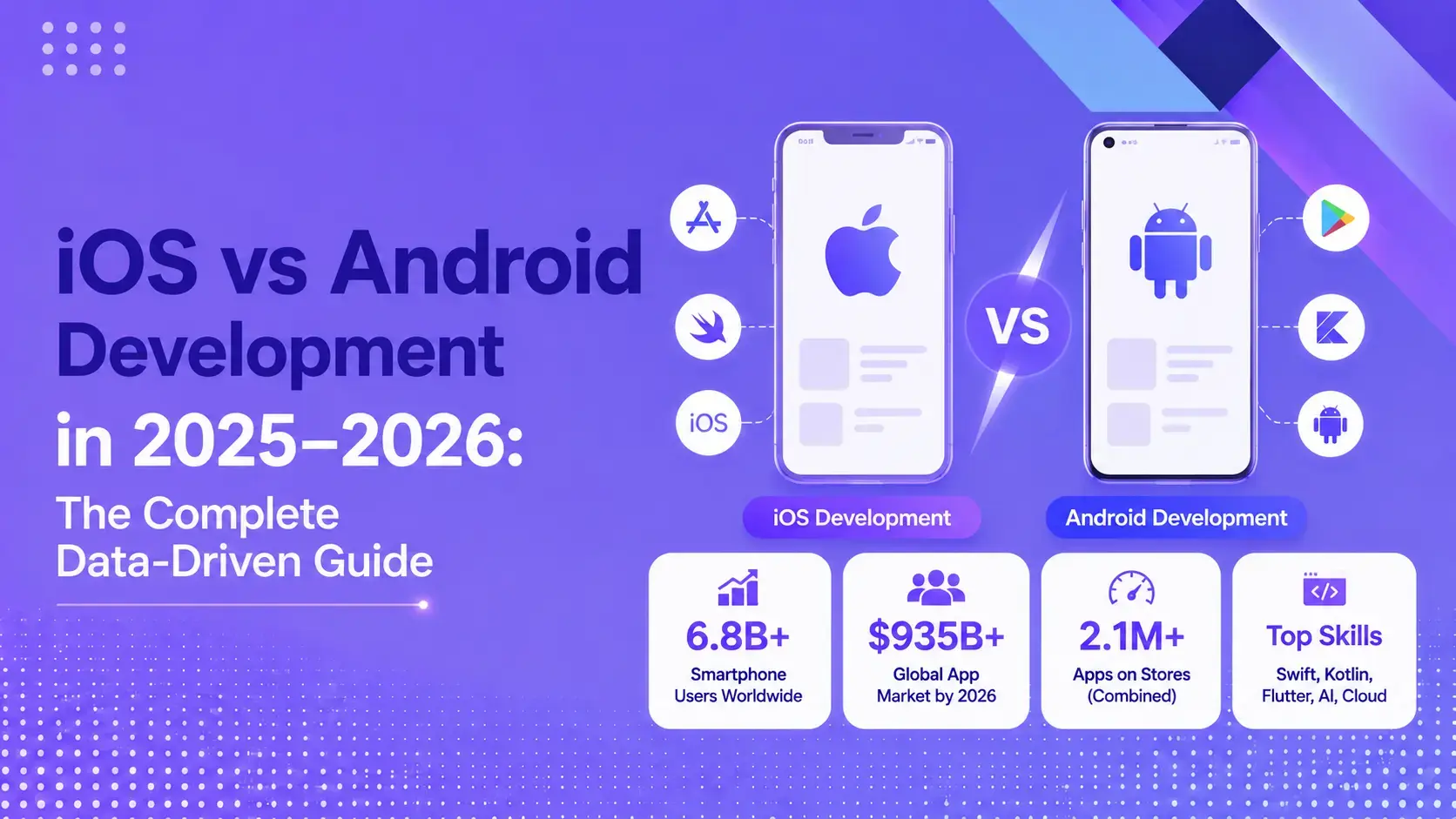
iOS vs Android Development in 2025–2026: The Complete Data-Driven Guide
May 19, 2026
AI in Healthcare: Real Use Cases, HIPAA Compliance & ROI in 2026
May 16, 2026
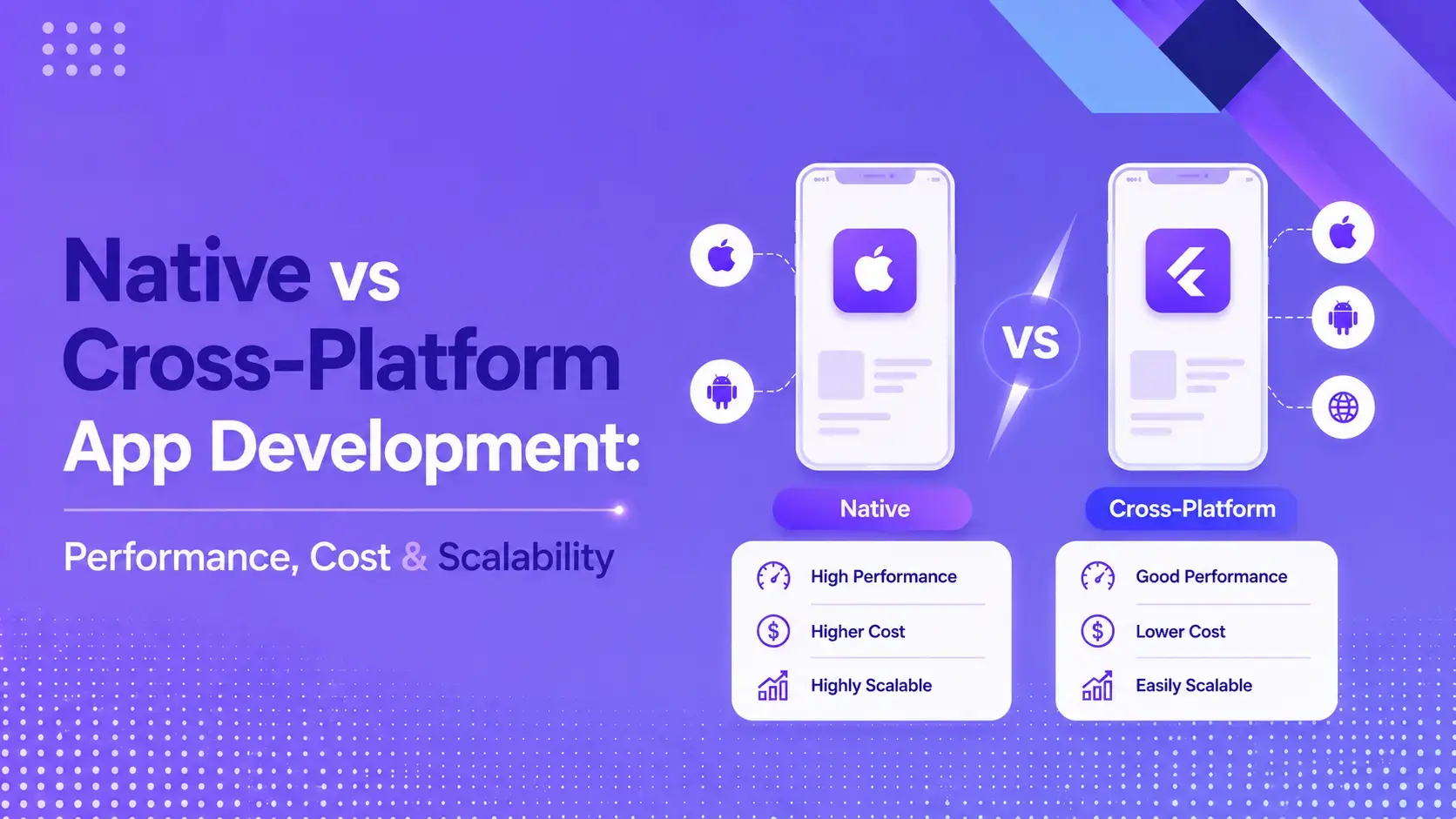
Native vs Cross-Platform App Development: Performance, Cost & Scalability
May 15, 2026
Claude vs ChatGPT (2026): Which AI Assistant Is Better?
May 12, 2026
Services & Solutions
Let's Connect
info@ostryx.com
+1 (850) 586-1700
4628 Southwinds Drive Destin, FL 32550 United States

Let's Build Together!

© All rights reserved 2026
