
Custom Mobile App Development in 2026: Cost, Process & Benefits
Everything you need to know about custom mobile app development in 2026, real pricing, 8-step process, Flutter vs native, and how to choose the right partner.
May 9, 2026
Custom mobile app development is the process of building a mobile application tailored specifically to a business's requirements, rather than adapting a generic off-the-shelf solution. It covers native iOS and Android apps, cross-platform builds, and progressive web apps (PWAs), from initial discovery through design, coding, testing, and post-launch support.
Why this decision matters more in 2026
Mobile usage has crossed 7.5 billion active users globally. App store revenue crossed $200B in 2025. But most businesses still struggle with the same question: build something custom, or buy a template solution?
The gap between custom and off-the-shelf has widened, not narrowed. AI-powered features, hardware integrations (AR, biometrics, wearables), and rising user expectations have made generic platforms limiting faster than ever before.
Enterprise build choice
73%
of enterprise apps built custom in 2025
Retention vs templates
2.1×
higher user retention vs off-the-shelf
Market scale
$935B
global mobile app market by 2027
UX risk
68%
of users abandon apps within 30 days if UX is poor
Core benefits of custom mobile app development
1. Built around your exact workflow, Off-the-shelf apps are built for the average use case. If your business process has any meaningful specificity, niche industry rules, unique data relationships, special compliance requirements, a generic app will fight you at every turn. Custom apps are modeled on your workflow, not the other way around.
2. Full ownership and IP control, When you build custom, you own the source code, the data, and the architecture. There are no vendor lock-in risks, no sudden pricing changes, no features disappearing in the next update. For regulated industries like fintech, healthcare, and legal, this is non-negotiable.
3. Scalability without hitting platform ceilings, SaaS tools impose limits on users, data volume, API calls, and feature access. A custom-built app scales with your business because its infrastructure is sized for your actual load, not a generic tier.
4. Deep integrations, Custom apps can connect natively to your ERP, CRM, payment gateways, IoT sensors, third-party APIs, and legacy systems. Off-the-shelf solutions offer integrations too, but only the ones that vendor chose to support.
5. Competitive differentiation, If your app experience is identical to your competitor's because you're both using the same platform, the app stops being a differentiator. Custom app development lets you build features that are uniquely yours.
Key insight: The ROI on custom mobile apps is highest when the problem is specific, the user base is known, and the workflow has clear inefficiencies a generic tool can't fix.
Types of mobile apps: choosing the right architecture
Type
Performance
Best for
Native iOS (Swift)
Highest
Complex apps, hardware-intensive features
Native Android (Kotlin)
Highest
Android-first markets, Google ecosystem integrations
React Native / Flutter
High
Cross-platform with near-native feel, faster time-to-market
Progressive Web App (PWA)
Moderate
Content apps, broad reach, no app store dependency
Hybrid (Ionic / Capacitor)
Moderate
Enterprise tools, internal use, limited budget
In 2026, Flutter and React Native have become the default cross-platform choice for most startups and SMEs. Native development remains the right call for apps that depend heavily on device hardware, AR, on-device machine learning, or advanced camera processing.
The custom mobile app development process
A well-run custom app project follows a clear, iterative structure. Here's what each phase actually involves, not just the label.
1
Discovery & requirements
Stakeholder interviews, competitor analysis, user persona mapping, technical feasibility review. Output: a Product Requirements Document (PRD) and project scope. This phase prevents the most expensive mistakes.
Duration: 1–3 weeks
2
UX research & wireframing
Information architecture, user journey mapping, low-fidelity wireframes. Tools like Figma or Axure used to define layout before any design or code starts.
Duration: 1–2 weeks
3
UI design & prototype
High-fidelity screen designs, design system creation, interactive prototype for stakeholder sign-off. Accessibility standards (WCAG 2.2) applied at this stage.
Duration: 2–4 weeks
4
Architecture & tech stack planning
Database schema, API design, third-party service selection, security model (auth, data encryption), CI/CD pipeline setup. Rushed decisions here create technical debt that's expensive to fix.
Duration: 1 week
5
Development sprints
Agile sprints (typically 2-week cycles). Frontend and backend developed in parallel. Code reviews, unit tests, and integration tests run continuously.
Duration: 8–24 weeks depending on scope
6
QA & testing
Functional testing, regression testing, performance testing, security audits, device compatibility testing across real hardware. Both automated test suites and manual QA.
Duration: 2–4 weeks
7
App store submission & launch
Apple App Store and Google Play submission, metadata optimization (ASO), phased rollout strategy, analytics setup (Firebase, Mixpanel).
Duration: 1–2 weeks
8
Post-launch support & iteration
Bug monitoring, OS update compatibility, feature roadmap execution, user feedback loops, performance optimization. Often underestimated, plan for ongoing investment.
Ongoing
Pricing guide: what custom mobile app development costs in 2026
Pricing varies massively based on complexity, team location, and feature set. Here's a grounded breakdown, not aspirational low-end estimates.
Pricing reality check: A quote under $15,000 for a feature-complete custom app is almost always a red flag. Either scope is being minimized, quality will suffer, or long-term support is excluded from the contract.
Simple app
$25K–$60K USD
5–10 screens, basic auth, 1–2 API integrations, standard UI. Examples: info apps, booking tools, simple calculators.
Most common · Mid-complexity
$60K–$180K USD
10–30 screens, user accounts, payments, push notifications, admin panel, 3–6 API integrations. Examples: marketplaces, SaaS mobile apps, health trackers.
Enterprise / complex
$180K–$500K+ USD
Real-time features, AI/ML on-device, complex backend, compliance-grade security, multi-platform, large team. Examples: fintech, telemedicine, logistics.
How to choose the right mobile app development company
- Portfolio includes apps in your industry or with comparable technical complexity
- Can demonstrate a QA process, not just promise one
- Provides a fixed-price or time-and-materials contract with transparent scope
- Has verifiable reviews on Clutch, GoodFirms, or direct client references
- Assigns a dedicated project manager, not just a developer point of contact
Avoid: agencies that can't explain their tech stack choices or avoid questions about testing
Avoid: fixed-scope contracts with no change order process, requirements always evolve
Featured development partner
Why Businesses Choose Ostryx for Custom Mobile App Development
Ostryx is a US-based custom software and mobile app development company that has delivered scalable iOS, Android, and cross-platform apps for startups and enterprises across North America, Europe, and the Middle East, including clients like Dubai Airports.
Need a sprint-ready team instead of placeholders? Talk to Ostryx about Mobile app development services and book a roadmap call when you're ready.
- Mobile App Development
- Web Development
- AI & Machine Learning
- UI/UX Design & Prototyping
- DevOps & Cloud
- Quality Assurance
- 🔄 Developer replacement, no delays, no extra costs
- 💼 Project-by-equity model available
- 🎯 10% off first hire · 15% off full project
- 🛡️ Day-one to post-launch support
- ⚡ Talent onboarded within one week
Experience
10+
Years of experience
Satisfaction
95%
Client satisfaction rate
Growth
29%
Avg. growth delivered
SLA
< 1wk
Developer replacement SLA
Visit Ostryx and review Mobile app development services to align scope, stack, and timeline with how you ship product.
4628 Southwinds Drive, Destin FL 32550, USA · info@ostryx.com · +1 (850) 586-1700
Common pitfalls that kill mobile app projects
Skipping discovery to save money, Discovery phases typically cost 5–10% of total budget. Skipping them is the single most reliable way to double the total budget mid-project through scope changes, rebuilds, and misaligned requirements.
Designing for developers, not users, A technically clean app with poor UX will fail in the market. User research and usability testing are not optional extras, they're the difference between a 4.5-star app and one that gets uninstalled after the first session.
Ignoring ongoing maintenance costs, Budget 15–25% of initial development cost per year for maintenance: iOS/Android OS updates, security patches, dependency updates, and server costs. Failing to budget this creates security vulnerabilities and app store delisting risk.
Treating the MVP as the final product, An MVP (minimum viable product) is a learning tool, not a finished app. Plan for at least two or three post-launch iteration cycles based on real user data before the app reaches its intended form.
Key takeaways
Custom mobile app development in 2026 is a significant but often correct investment for businesses with specific requirements. The core decision criteria are simple: if an off-the-shelf solution covers 80%+ of your needs without compromising security, scalability, or user experience, use it. If your workflow, compliance requirements, or competitive positioning demands more control, custom is the right path.
Budget realistically, invest in discovery, choose a partner with verifiable experience, and plan for the app as an ongoing product, not a one-time project.
Frequently Asked Questions
Typical timelines: A simple app (5–10 screens) takes 10–16 weeks end-to-end. A mid-complexity app with payments, user accounts, and an admin panel takes 20–32 weeks. Enterprise-grade apps with AI features, complex integrations, or compliance requirements often take 9–18 months. These timelines assume a full-time dedicated team. Part-time or shared-resource engagements extend delivery significantly.
Native development means building separate apps for iOS (Swift/Objective-C) and Android (Kotlin/Java), each optimized for its platform. It delivers the best performance and deepest hardware access but costs more, you're building two codebases. Cross-platform development (Flutter, React Native) uses a single shared codebase that compiles to both platforms. It reduces cost and development time by 30–40%, with near-native performance. For most startups and mid-market businesses, cross-platform is the right default. Native is justified when your app requires deep OS-level integrations, AR, or on-device ML.
Annual mobile app maintenance typically costs 15–25% of the original development investment. This covers iOS and Android OS version updates (Apple and Google release major updates annually), third-party SDK and library upgrades, server and cloud infrastructure costs, security patches, bug fixes, and performance monitoring. An app that cost $100,000 to build should be budgeted $15,000–$25,000 per year to keep it stable, secure, and store-compliant.
Almost always: build an MVP first. An MVP (Minimum Viable Product) lets you validate your core hypothesis with real users before committing the full budget. It reduces the risk of building features nobody uses, surfaces UX problems early when they're cheap to fix, and can attract early customers or investor interest. The MVP should cover your single most critical user journey, not everything, but the one workflow that proves value. Plan to iterate 2–3 times post-launch before the product reaches its intended form.
Both are mature, production-ready frameworks in 2026. Flutter (Google) offers pixel-perfect UI consistency across platforms, excellent performance, and a growing ecosystem, ideal when design fidelity and smooth animations matter most. React Native (Meta) has a larger developer talent pool, better JavaScript/TypeScript integration, and easier web-to-mobile transitions, ideal when your team is JS-heavy or you need strong third-party library support. For new projects, Flutter is increasingly the default choice due to its rendering consistency. React Native wins when you need faster developer hiring or have an existing JS codebase to leverage.
Yes, most production mobile apps require a backend. The backend handles user authentication, data storage, business logic, push notifications, third-party integrations, and APIs. Options range from BaaS (Backend-as-a-Service) platforms like Firebase or Supabase (fast to set up, good for MVPs) to custom backend development using Node.js, Python, Go, or similar (more control, better for complex logic and scale). Apps with real-time features (chat, live tracking, collaborative tools) typically require a custom backend from day one.
Both stores have review processes with different timelines and requirements. Apple App Store: review typically takes 1–3 business days; strict guidelines around privacy, payment flows, UI patterns, and in-app purchase rules (Apple takes 15–30% commission on in-app transactions). Google Play: review is usually 1–7 days; slightly more lenient but has tightened significantly since 2023. Key requirements for both: privacy policy, age rating declaration, functional demo account if login is required, and no misleading descriptions. Budget at least 2 weeks for the full submission and review cycle, including potential resubmissions.
The highest-value cost reduction strategies, in order: (1) Start cross-platform, one Flutter or React Native codebase instead of two native builds saves 30–40%. (2) Scope ruthlessly, an MVP with 3–5 core features costs a fraction of a feature-complete v1; launch, learn, then build. (3) Use offshore talent wisely, South Asian or Eastern European teams at $20–$80/hr can deliver excellent quality, but vet them carefully through portfolio, code samples, and references. (4) Use BaaS for the backend, Firebase or Supabase can replace weeks of custom backend work for MVPs. Avoid no-code/low-code platforms if you anticipate complex logic, high scale, or need custom integrations, the rebuild cost when you outgrow them usually exceeds what you saved.
Recent Insights
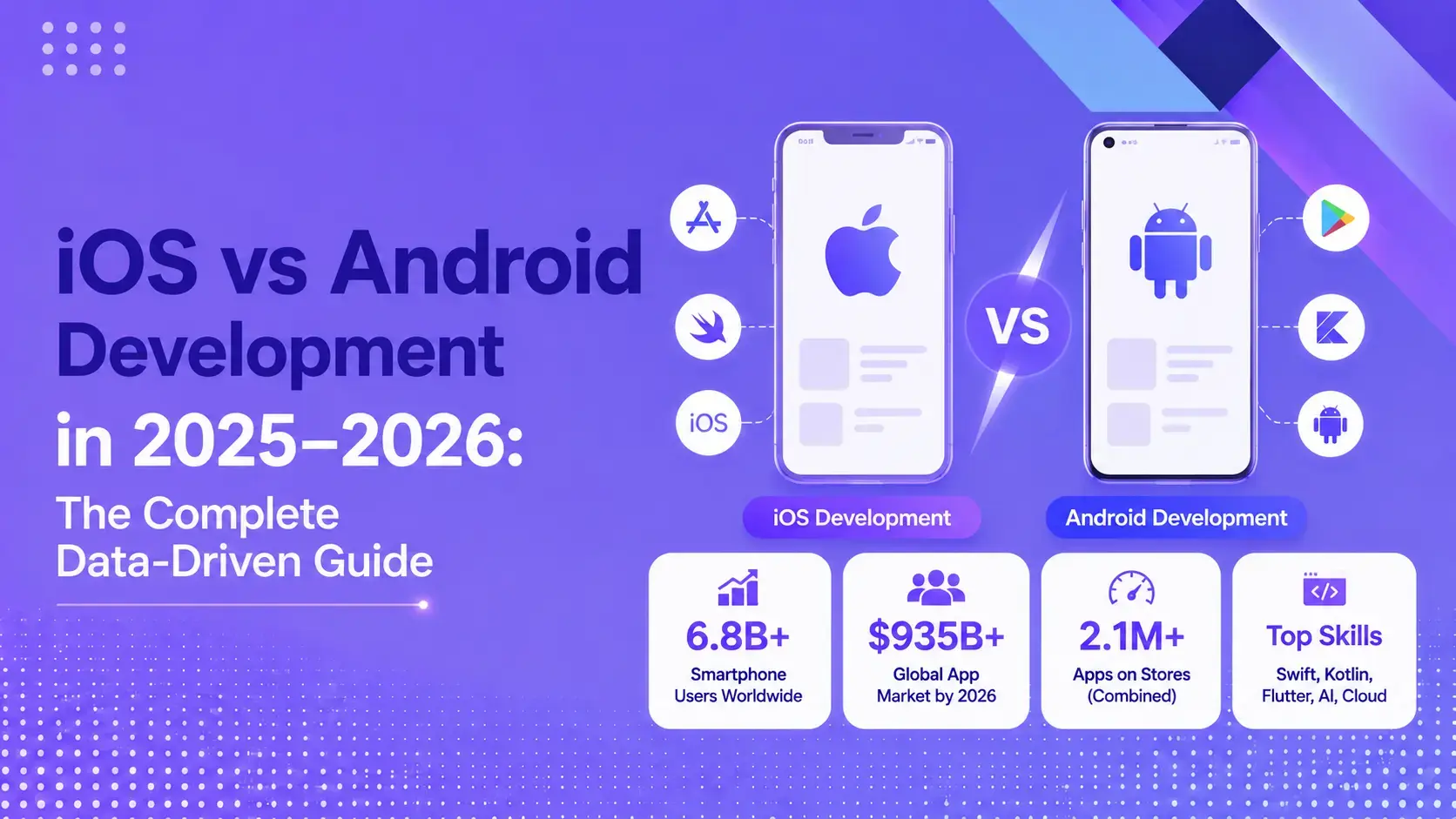
iOS vs Android Development in 2025–2026: The Complete Data-Driven Guide
May 19, 2026
AI in Healthcare: Real Use Cases, HIPAA Compliance & ROI in 2026
May 16, 2026
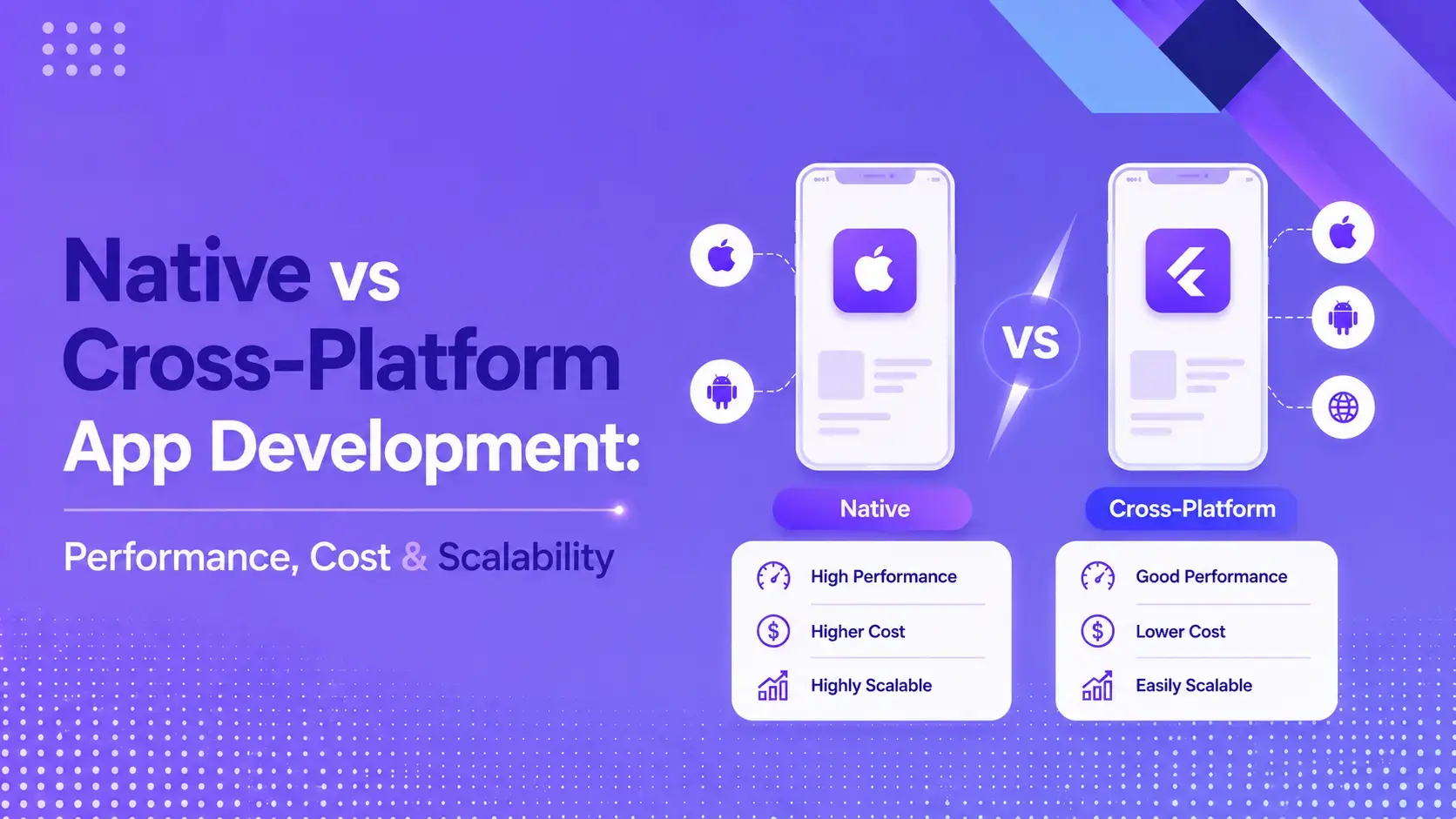
Native vs Cross-Platform App Development: Performance, Cost & Scalability
May 15, 2026
Claude vs ChatGPT (2026): Which AI Assistant Is Better?
May 12, 2026
Services & Solutions
Let's Connect
info@ostryx.com
+1 (850) 586-1700
2A Church Street, Toronto

Let's Build Together!

© All rights reserved 2026
